

Scale isn't luck.
It's architecture.
Most business advice is theory. Kurent Studios is where we document the build.
This is where we deconstruct the specific systems, frameworks, and operational levers that transform a high-stress job into a transferable asset.
Whether you're stuck in the Principal's Trap or preparing for exit, use these resources to stop guessing and start engineering.
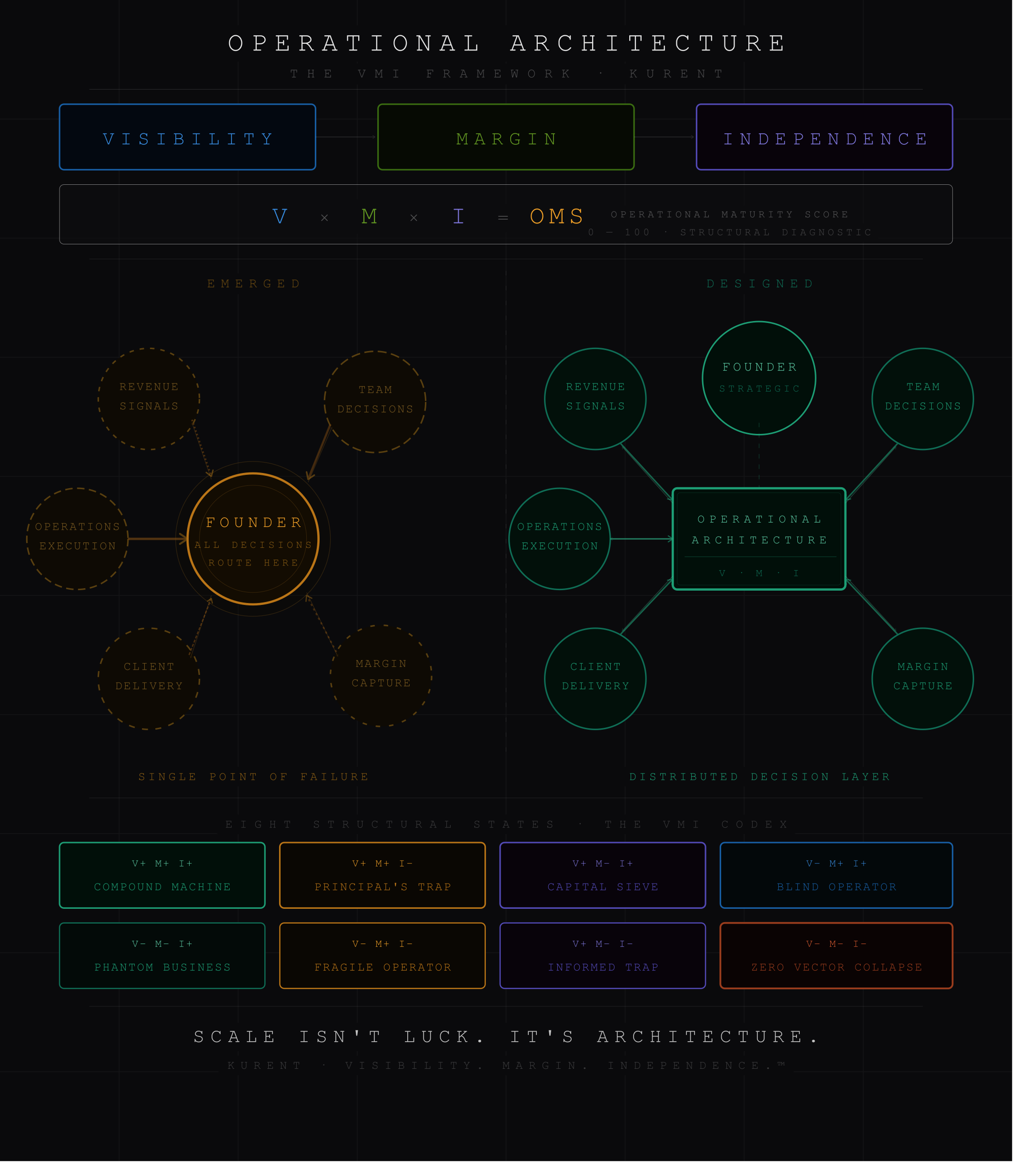
What Is Operational Architecture — And Why Most Founders Have Never Built One
Most founders believe they have a "systems problem" and attempt to solve it with more SOPs. The reality? They have an architecture problem. While SOPs describe how to do a task, Operational Architecture dictates how your business generates Visibility, Margin, and Independence. If your business can't survive a 30-day "founder absence test," you don't have an asset—you have a high-stress job.
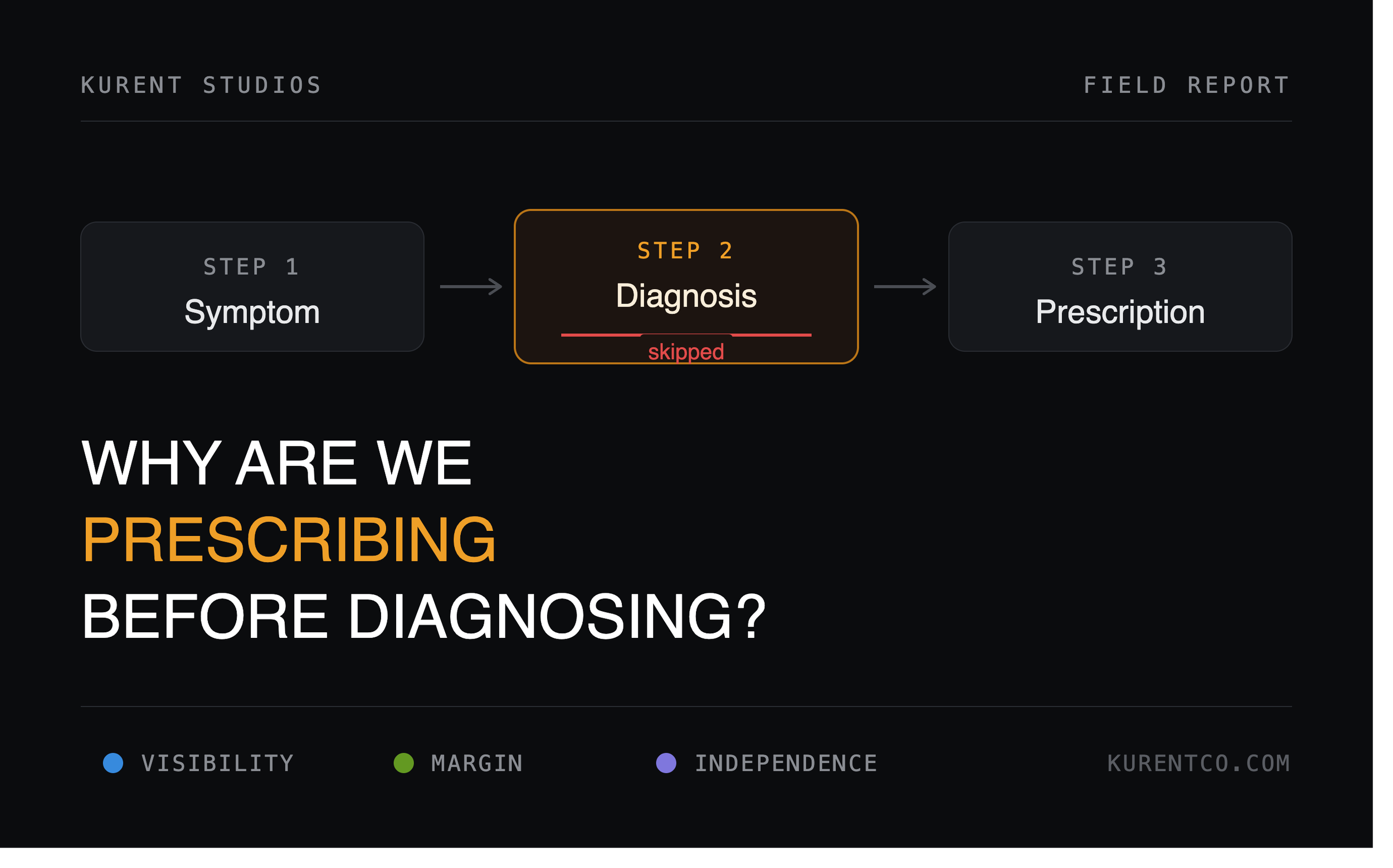
Why Are We Prescribing Before Diagnosing?
Medicine, real estate, and wealth management all refuse to accept self-diagnosis because proximity compromises objectivity. Yet founders routinely skip the operational exam for their most valuable asset. Discover the invisible structural costs of prescribing a fix before the cause has even been named.
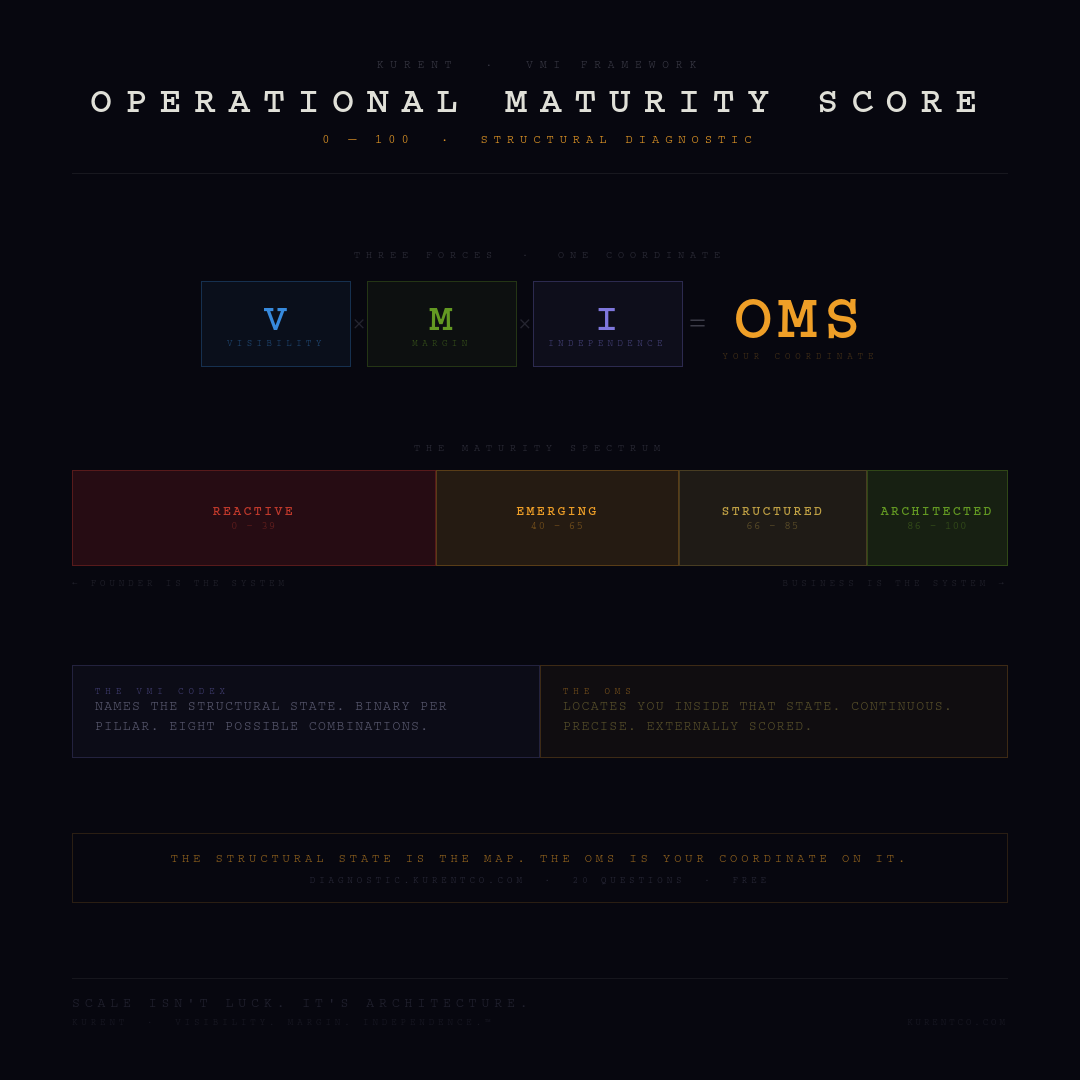
The Operational Maturity Score: What the Number Actually Measures
Two businesses generating identical top-line revenue can sit at opposite ends of the operational spectrum. Discover why the Operational Maturity Score (OMS) is the ultimate diagnostic coordinate for locating your constraints and mapping your exit.
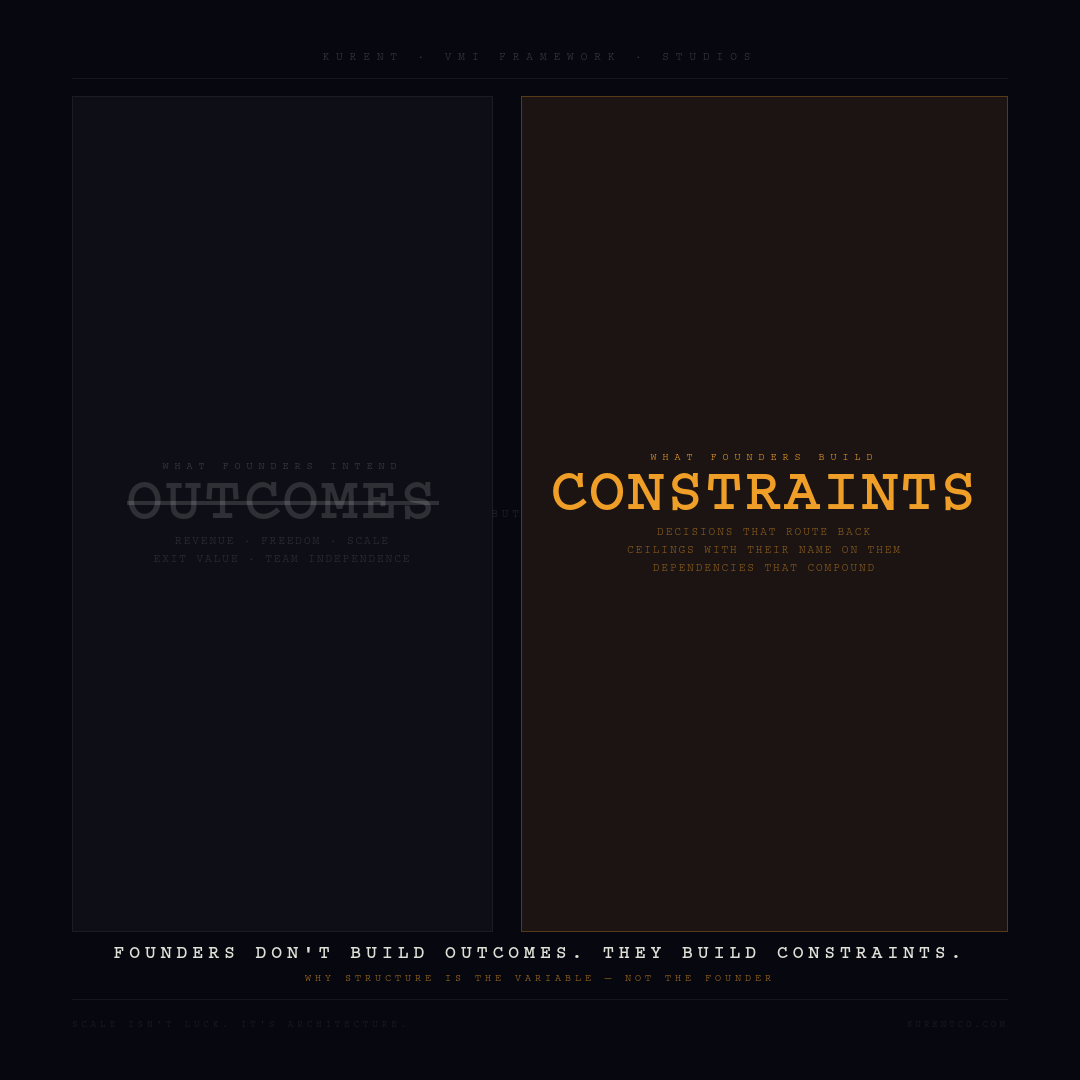
Founders Don't Build Outcomes. They Build Constraints.
Most business advice treats the founder as the dominant variable. Kurent's premise is structural: people express behavior inside the constraints their business's structure defines. That distinction changes what's worth fixing.
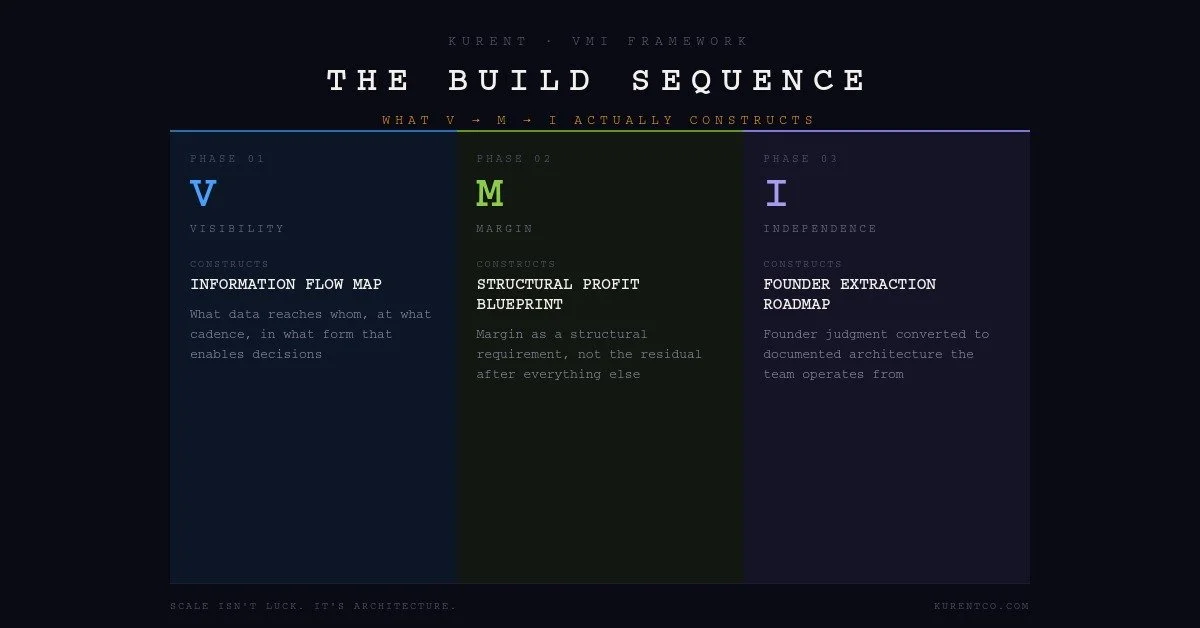
The Build Sequence: What V→M→I Actually Constructs
Understanding the VMI sequence and executing it are different capabilities. This piece names the three architectural deliverables the build actually produces — and where founders confuse understanding the framework with having built it.
The 30-Day Disconnect
Turn off your phone. Board a flight. Remain completely unreachable for 30 days. What actually happens to your business? The answer isn't a baseline aspiration—it is a brutal, precise architectural diagnostic of your Independence pillar. Here is how you pass the test.
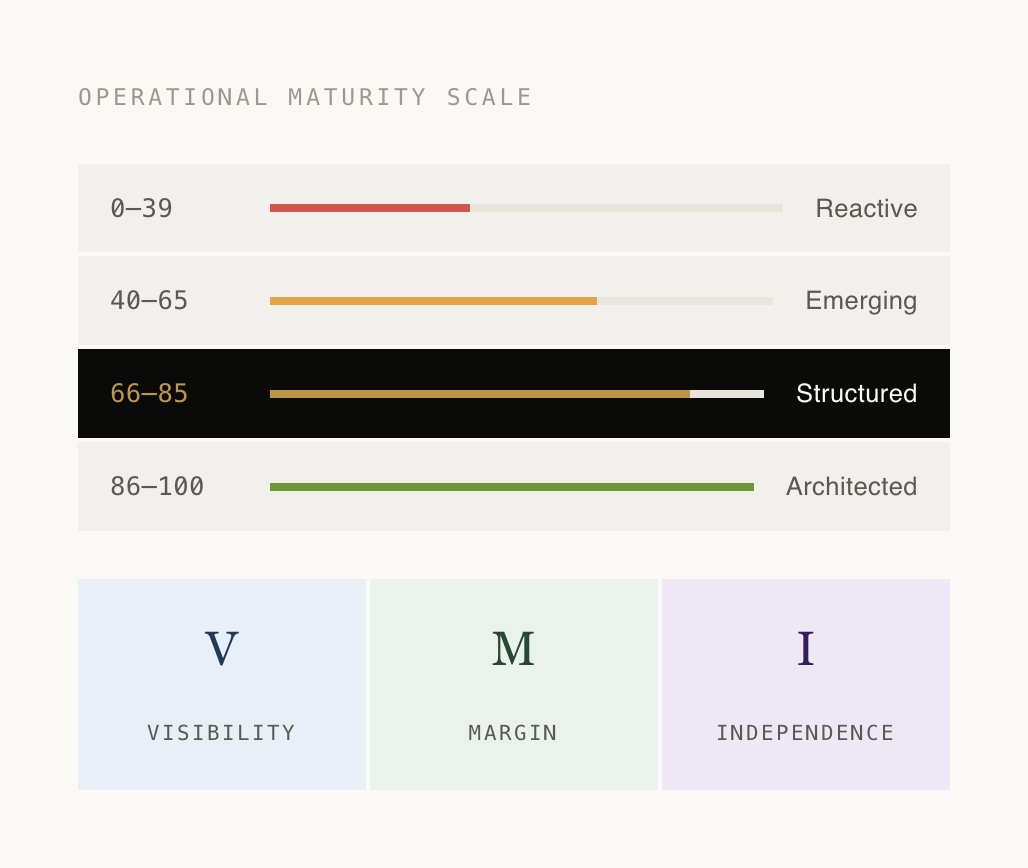
The Multiplier Effect
Two businesses can have identical $5M revenues and $1M EBITDAs, yet one exits for $3M while the other commands $6M+. The difference isn’t financial—it’s structural. Discover how the "key-man discount" actively penalizes founder dependency, and why your Operational Maturity Score is the only true metric that determines whether you own a demanding job or a highly transferable asset.
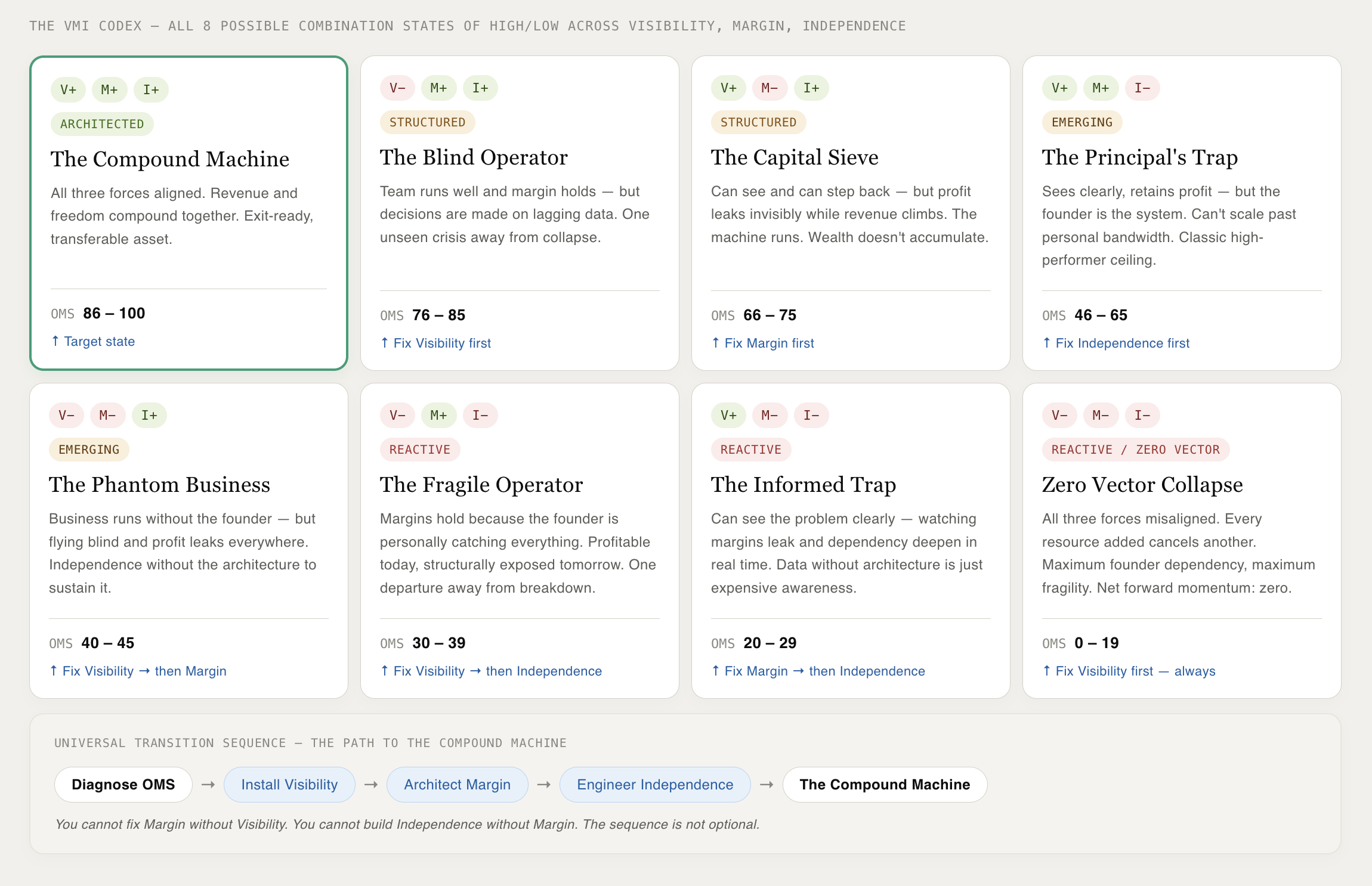
The VMI Codex
Most founders don't have a business problem. They have a misdiagnosed structural state. The VMI Codex is the complete taxonomy — eight named conditions, each with a specific failure mode and a non-optional path to The Compound Machine.
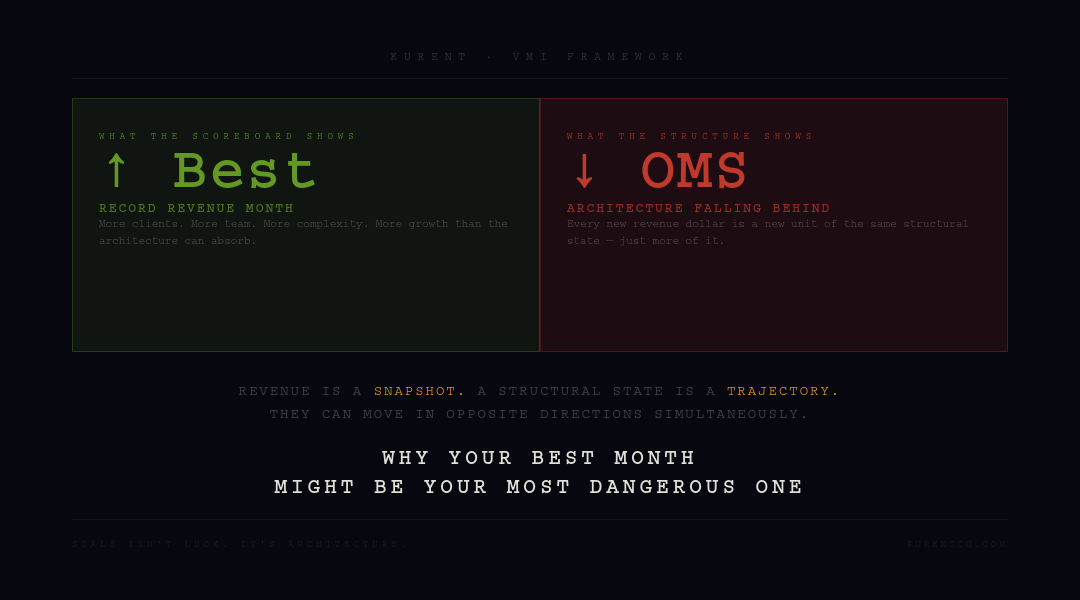
Why Your Best Month Might Be Your Most Dangerous One
A record revenue month and a falling OMS can happen in the same quarter. Revenue is a snapshot. Structural state is a trajectory — they move independently.
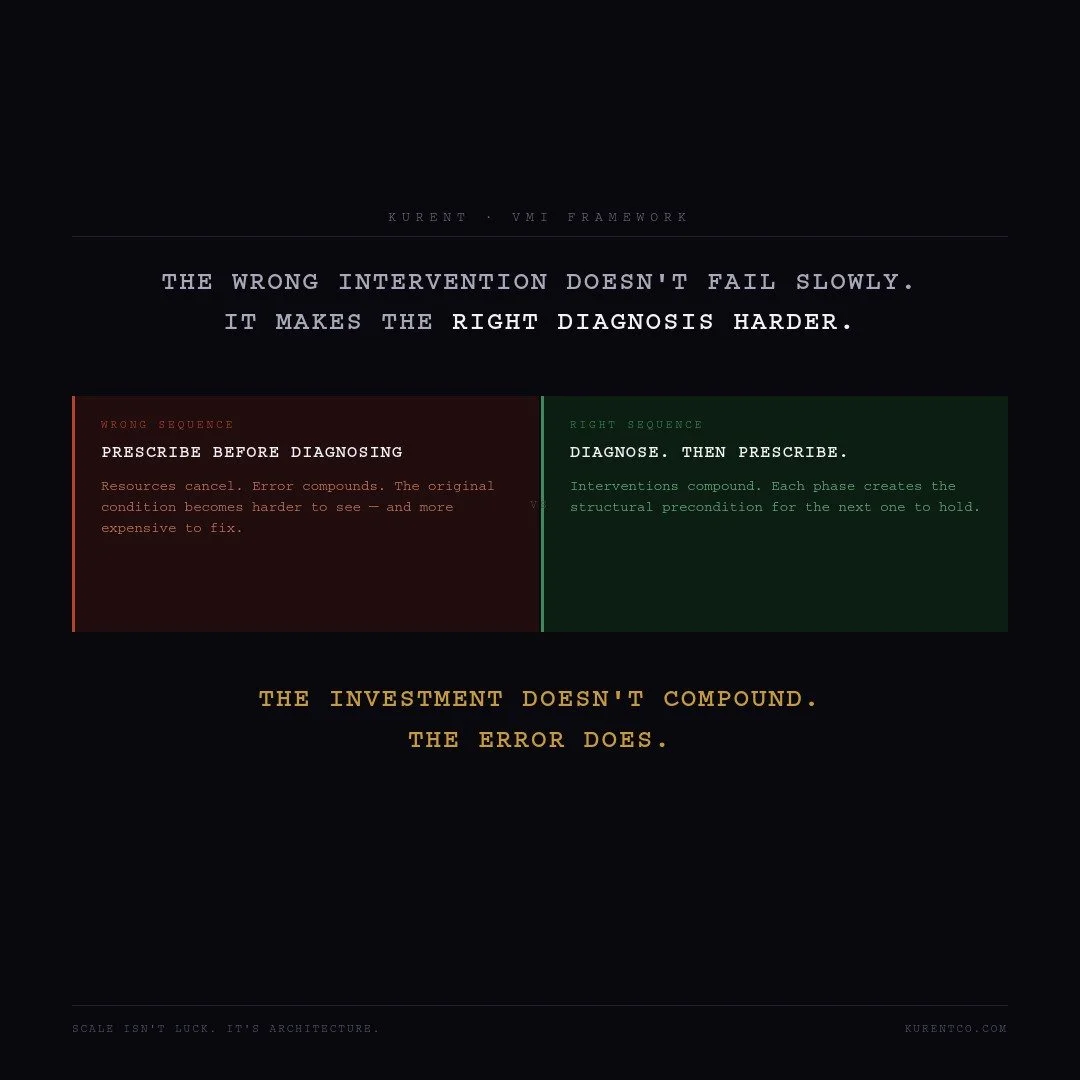
The Most Expensive Mistake a Founder Can Make Isn't Moving Too Slow
Every resource allocated against the wrong structural constraint doesn't just fail to help — it deepens the real problem. The economic case for diagnosing before you execute.

The Principal’s Trap: Why Your Business Still Runs Through You
You built your firm on your personal reputation. In the beginning, this was your superpower. Today, it's your prison. Here's why professional services firms plateau—and the framework to escape the trap.

The Zero Vector Collapse
Most founder-led businesses stall when growth outpaces architecture. Using the physics of "Vector Cancellation," this paper demonstrates why adding resources without structural integrity makes the problem worse. Learn how the VMI Framework restores net forward momentum.
Anatomy of a Profit Leak
Revenue measures what flows in. Margin measures what stays. If you’ve ever wondered why your top line is growing but your take-home isn't, you aren't looking at a sales problem—you’re looking at a structural leak. Here is where the money is actually going.
The Visibility Gap
Most founders manage their business with yesterday’s data, creating a "Visibility Gap" that turns leadership into crisis management. Learn the three signals you are missing—and the architecture required to see what’s coming next.
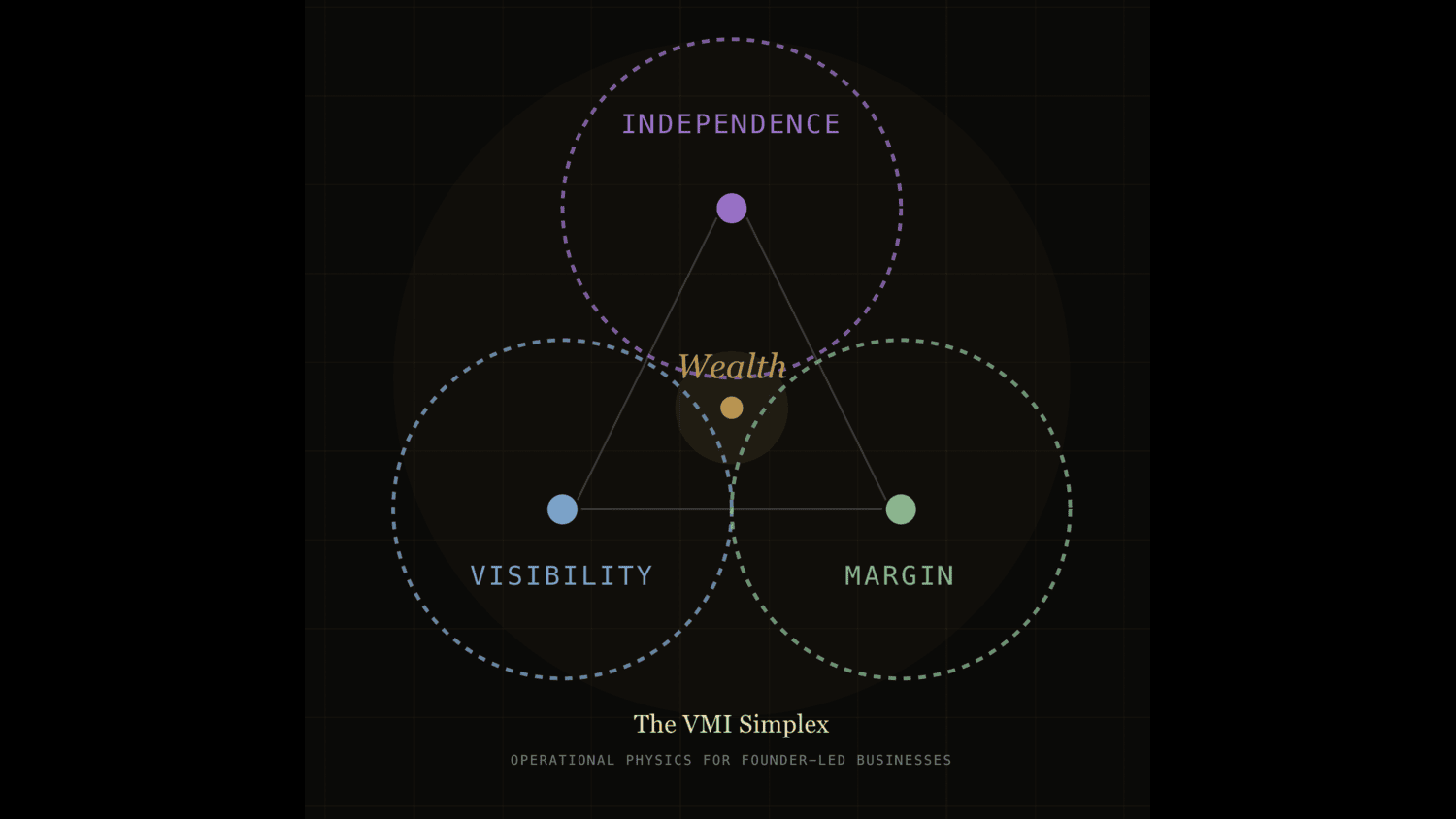
The VMI Manifesto
You haven't built a company. You've amplified a job. And the higher revenue climbs, the more expensive that job becomes." The VMI Manifesto defines the structural shift from founder heroics to operational architecture.

VMI as a Decision Filter
Most founders treat VMI like a blood panel — something you check periodically. It's also a decision-making model. Every hire, price, and client you take is a vector pointing the business toward compounding strength or invisible fragility, and the difference shows up long before the P&L does.
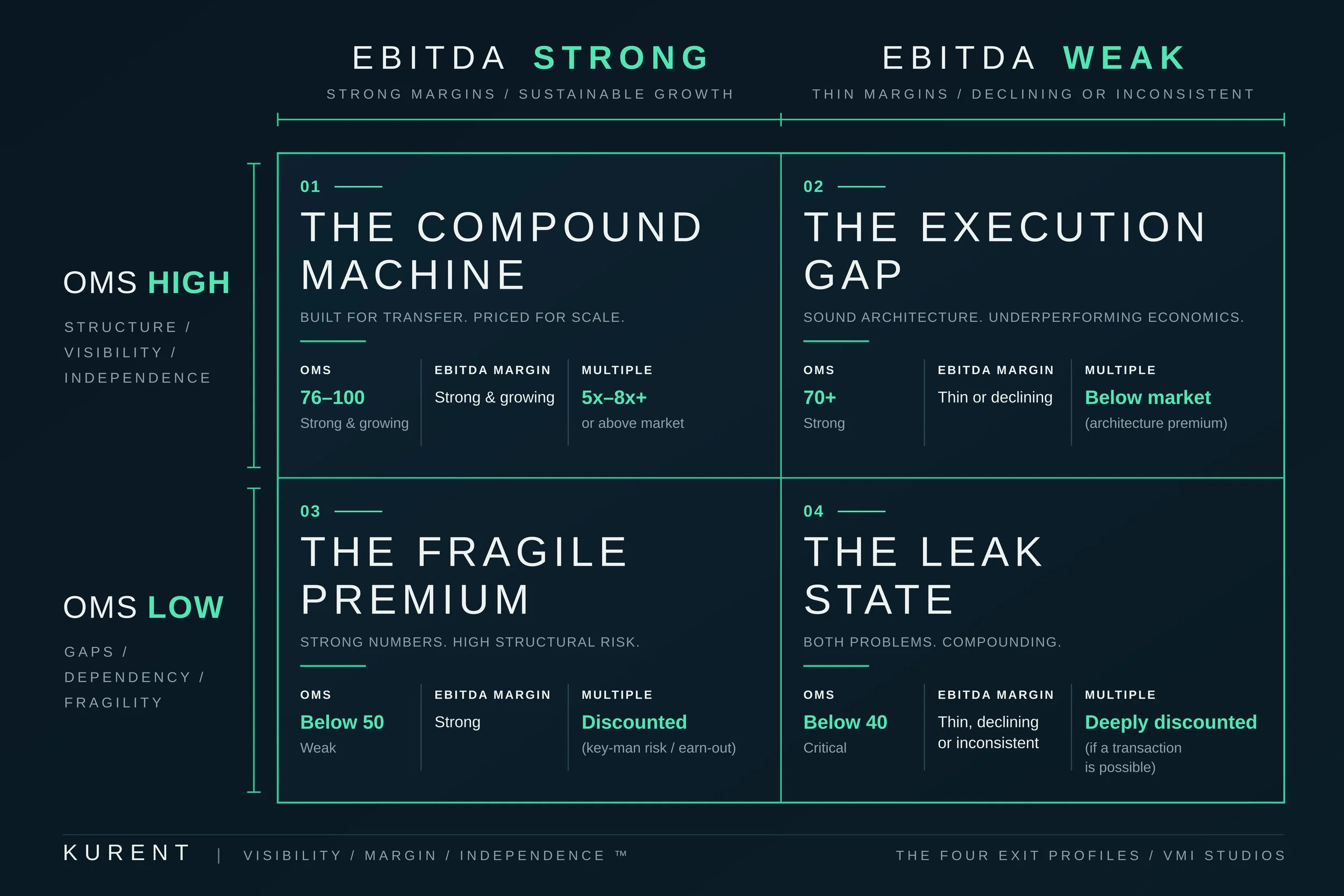
The Four Exit Profiles
Most founders price an exit on revenue. Buyers price it on two things: what the business earns, and what it's worth without the founder in the room. Map OMS against EBITDA and four exit profiles appear, each with its own multiple and its own fix sequence.
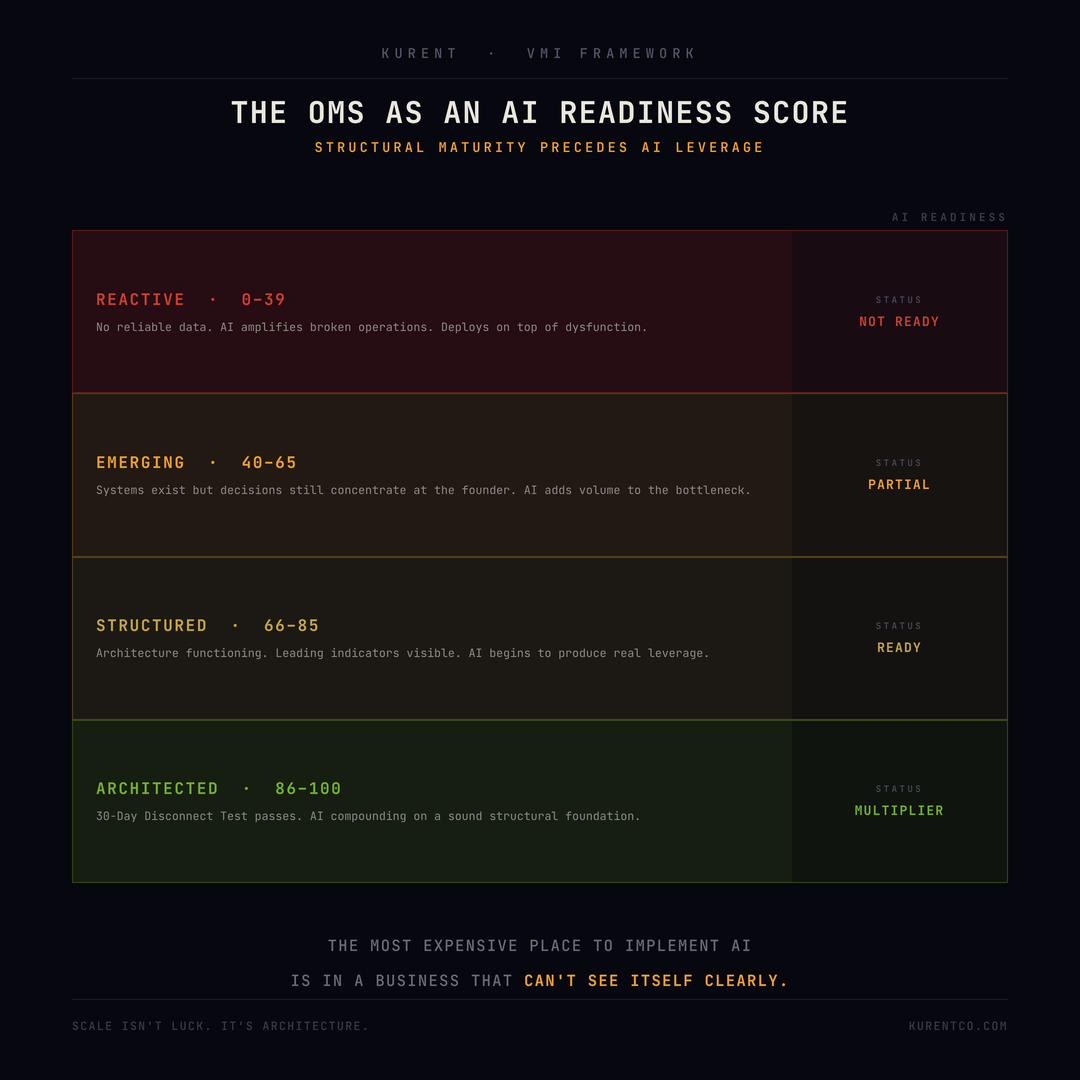
The OMS as an AI Readiness Score
Most AI readiness frameworks check the data or the culture. Neither predicts what happens when AI meets the business. Visibility, Margin, and Independence do, because AI amplifies whatever structural state it enters.
// The Architect

LA Walker is the founder of Kurent and a practicing Operations Architect. Before building Kurent, he designed the operational infrastructure behind hyper-growth at companies like Elastic and Palo Alto Networks — organizations where complexity compounds fast and systems either hold or break visibly.
That experience left him with one conviction: the same operational physics that govern a $500M company apply at $3M. Most founders just never get access to them.
Kurent exists to close that gap.