

Scale isn't luck.
It's architecture.
Most business advice is theory. Kurent Studios is where we document the build.
This is where we deconstruct the specific systems, frameworks, and operational levers that transform a high-stress job into a transferable asset.
Whether you're stuck in the Principal's Trap or preparing for exit, use these resources to stop guessing and start engineering.
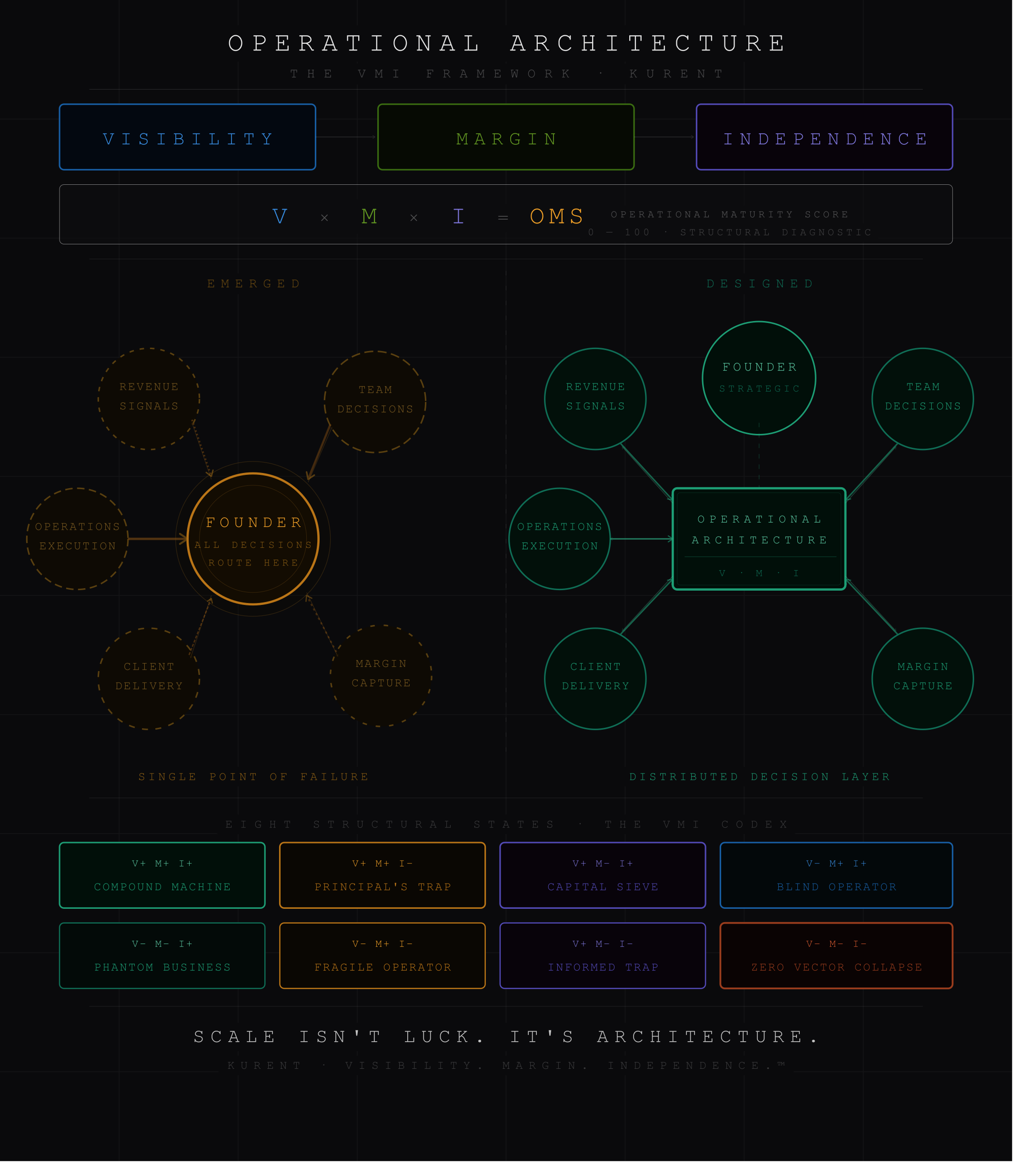
What Is Operational Architecture — And Why Most Founders Have Never Built One
Most founders believe they have a "systems problem" and attempt to solve it with more SOPs. The reality? They have an architecture problem. While SOPs describe how to do a task, Operational Architecture dictates how your business generates Visibility, Margin, and Independence. If your business can't survive a 30-day "founder absence test," you don't have an asset—you have a high-stress job.
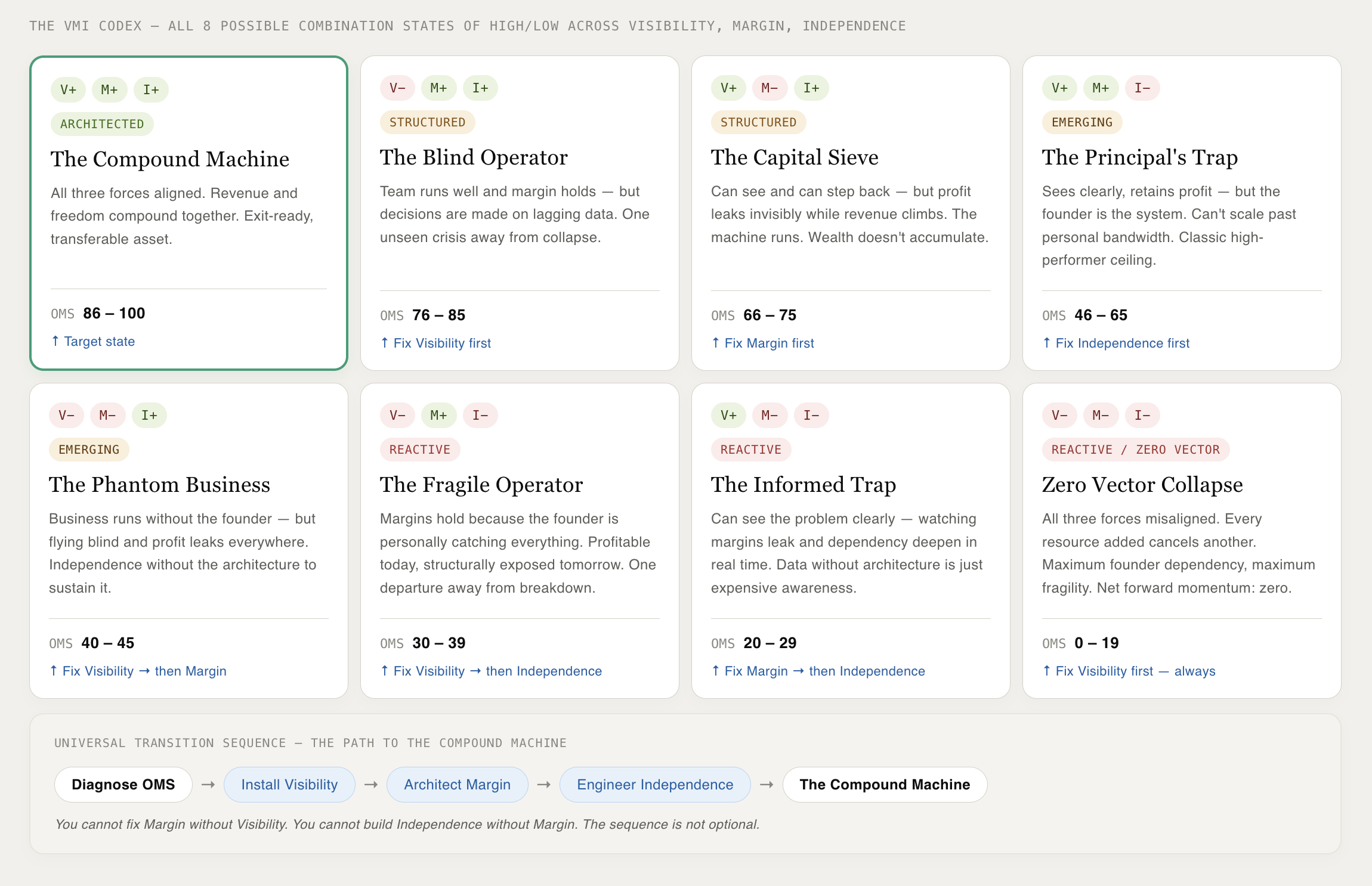
The VMI Codex
Most founders don't have a business problem. They have a misdiagnosed structural state. The VMI Codex is the complete taxonomy — eight named conditions, each with a specific failure mode and a non-optional path to The Compound Machine.
Anatomy of a Profit Leak
Revenue measures what flows in. Margin measures what stays. If you’ve ever wondered why your top line is growing but your take-home isn't, you aren't looking at a sales problem—you’re looking at a structural leak. Here is where the money is actually going.
// The Architect

LA Walker is the founder of Kurent and a practicing Operations Architect. Before building Kurent, he designed the operational infrastructure behind hyper-growth at companies like Elastic and Palo Alto Networks — organizations where complexity compounds fast and systems either hold or break visibly.
That experience left him with one conviction: the same operational physics that govern a $500M company apply at $3M. Most founders just never get access to them.
Kurent exists to close that gap.